
Board games worth playing solo
Games with designed solo modes are worth tracking separately from their multiplayer versions — the experience is different enough to be a genuine reason to own them, not a substitute for a cancelled game night.
Games with official solo modes treat one-player play as a design problem worth solving. Several of them are as focused and replayable solo as in their standard multiplayer form — and a few work better with one player than with more.
Three types of solo mode
Solo modes fall into three categories, and they ask different things from the player.
Score-challenge modes replace an opponent with a target. The game itself provides the constraint — a score to beat, an optimisation to complete — rather than simulating a rival. Cascadia works this way: the same tile-laying decisions from multiplayer, scaled to a score benchmark. The solo version runs about the same length as two-player and is a reasonable entry point if you already know the game.
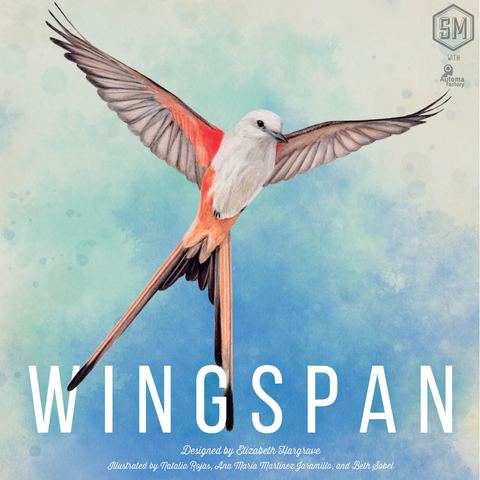
Automa modes simulate an active competitor using a separate card system. The Automa Factory, a studio founded by Morten Monrad Pedersen that specialises in this design work, built the system used in Wingspan: a deck of cards determines which actions a simulated bird-collector takes, so the human player faces genuine competitive pressure without managing a second full player. Ark Nova uses a different structure — a rival institution score track — to produce similar pressure across the same card combinations.
Purpose-built solo designs have no multiplayer version to adapt. Black Sonata is this type: a deduction game where you reconstruct the movements of Shakespeare’s “Dark Lady” through a deck that simulates her pattern without any opponent or automa. There is nothing to translate from a multiplayer game; this is the game.
Starting out
Cascadia is the lowest barrier if you already own it. A score-challenge mode in a 30-45 minute tile game asks less of a first solo session than an Automa system or a deduction puzzle. You already know the decisions; the solo mode just changes what you are optimising for.
Black Sonata is compact and self-contained — no expansion, no extra system to learn. The rules are lighter than they look because there is no player interaction to govern, just a deck pattern and your inferences from it. If you are drawn to deduction games, this one was built for exactly the play experience you are imagining.
When the Automa mode is the point
Wingspan’s Automa rewards players who already know the base game. The simulated rival occupies slots in the bird display, restricting your access to cards as a real opponent would. Getting the most from that constraint requires knowing what the Automa is blocking — which means the full solo experience only opens up after enough multiplayer sessions to read the display competitively. Playing it on your first session means the simulation is mostly invisible.
Ark Nova solo preserves the same card-combination depth as its multiplayer version across 90-150 minutes per the official time range. The rival institution tracks its own conservation points independently, giving you a target that changes with the game state. The same setup complexity applies at one player; the benefit is the undivided attention to your own engine.
Long campaigns
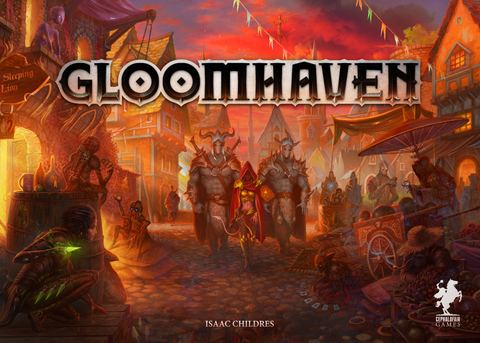
Gloomhaven supports solo play across its full campaign. Playing with a single character changes the experience from party coordination to single-engine optimisation — slower campaign progress, more focused tactical sessions. The game includes official solo scenarios for experienced players alongside the standard campaign. The campaign’s length is identical whether you play solo or with a group; the scheduling problem disappears, but the time commitment does not.
Rules questions during solo play
When the table is just you, there is no partner to ask when a ruling comes up. Rodney at /rules is designed for this situation: choose the supported game, describe the question, and get an answer from the reviewed rulebook without a rulebook search or a guess. Games with dense card interactions — Wingspan and Ark Nova both generate genuine edge cases — ask the same questions at one player as at four.
If the game is not in the supported list, the official rulebook remains the reference; Rodney will not improvise from a game it has not reviewed.
Finding your solo games
The collection tracker’s owned list shows each game’s recorded player range. You can check which of your titles start at one player there; the profile does not provide a solo-game count. Solo gaming also has a community specifically around the format: BGG’s 1 Player Guild is the reference point for recommendations, variants and discussion beyond what a buying guide covers.
For two-player games that also work at one, see two-player board games. For games that work at larger groups, the three and four player and five and six player guides cover the same fit-before-picks logic.
The games
Every entry links to its full catalogue record


What are the best board games to play solo?
Board games with official solo modes — score-challenge puzzles, Automa-driven competition, and long campaigns — and what makes each one work for one player.
Search the full catalogueResearch sources
Accessed and checked individually- Official sourceAutoma Factory: About — Automa Factory
Accessed 25 September 2026
Automa Factory, founded by Morten Monrad Pedersen in 2015, designs solo modes for multiplayer games. The Automa takes the place of a human player while the human plays by the same rules as in multiplayer. Created the solo systems for Wingspan, Viticulture, Scythe and others.
- Community discussionShelfGamer: Why You Should Try Solo Board Gaming: 9 Reasons to Play Alone
Accessed 25 September 2026
Identifies nine reasons hobbyists play board games solo, including scheduling flexibility, playing games the main group won't try, strategy experimentation, and learning rules before a group session. These are reported community motivations, not a representative survey.
- Community discussionBoardGameGeek: 1 Player Guild — solo board gaming community
Accessed 25 September 2026
BGG's dedicated solo gaming community, active since the early days of the hobby's growth. Used here as a reference for the established community around solo play, not as editorial evidence for specific game recommendations.
More guides
- Buying guideBoard games past the gateway stageSix board games for groups that have enjoyed Ticket to Ride or Catan and want more strategic depth. Player counts, teach times, and fit notes for each.
- ReviewsBlood Rage, according to the people who played itFive reviewers praise Blood Rage's miniatures and card-driven combat, but split on expansion pricing, a figurine design, and whether one card distorts the game.
- Table cultureThe rule you have been getting wrongHow common rule errors stay hidden in popular games, why they rarely surface until someone checks, and what to do when you find one mid-session.