
Board games for 3 or 4 players
Three or four players is where most board game mechanisms find their pace — enough competition for routes and resources to matter, enough players for cooperation to have real stakes. The eight games below all include 3–4 in their publisher-stated range; each works for a different reason at that count.
Three or four is the player count where most board game mechanisms deliver what the designer intended. At two, competition for routes or resources may feel thin; at five or six, the uptime between turns can drag. The range in between is where the majority of catalogued games place their recommended count.
This guide covers eight games that support 3–4 within their publisher-stated range, with a note on what the mechanism does differently at this size.
Ticket to Ride
2–5 players. Around 75–90 minutes.
Ticket to Ride’s central mechanic is claiming train routes before another player does. At two players, most routes stay available long enough that the game rarely produces a real block — there is too much map for two people to cover. At three or four, the key corridors start filling earlier; a route you planned to claim in two turns gets taken by the player who moved first.
The tension between collecting enough cards for a long route and moving before someone else takes it is where Ticket to Ride earns its accessibility. That tension is present at three or four in a way it is not at two.
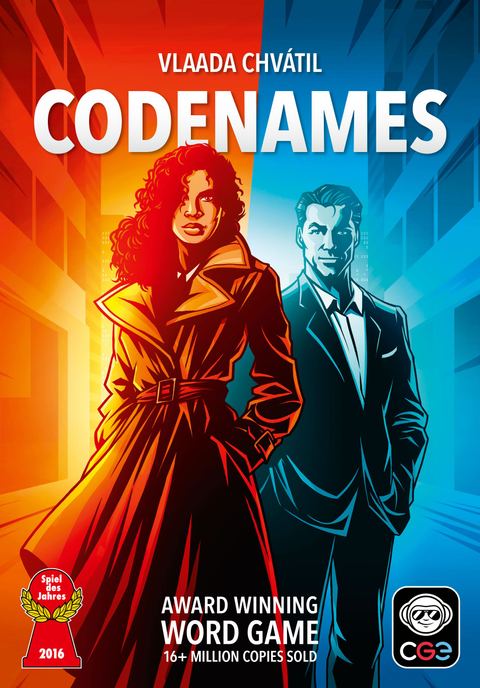
Codenames
2–8+ players. Around 15–30 minutes.
Codenames works in two teams. The mechanism assumes even teams — one clue-giver and at least one guesser per side, balanced in number. Four players, two per team, is the smallest count that produces this without one team having a structural advantage.
At three players, one team has an extra guesser, which changes both the available time and the clue-giver’s calculation. At four, the symmetry is correct, and the social pressure that makes the clue-giving entertaining — guessing wrong costs a turn — lands with the right weight.
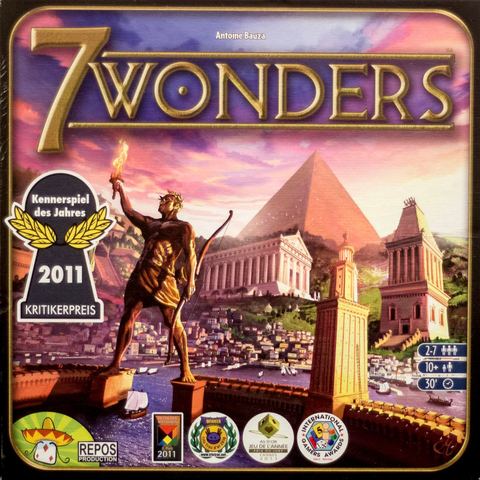
7 Wonders
2–7 players. Around 30 minutes.
7 Wonders passes a hand of cards around the table. Each player drafts one, plays it, and passes the rest left or right. At two players, a variant adjusts the mechanism to compensate for having only one neighbour. At three or more, each player has different left and right neighbours competing for their own resources.
The neighbour interaction — where military, wonder abilities and late-game colour runs intersect with two different players — only works as intended at three or more. The play time stays around 30 minutes regardless of player count, which means 7 Wonders scales without the uptime drag that longer games carry.
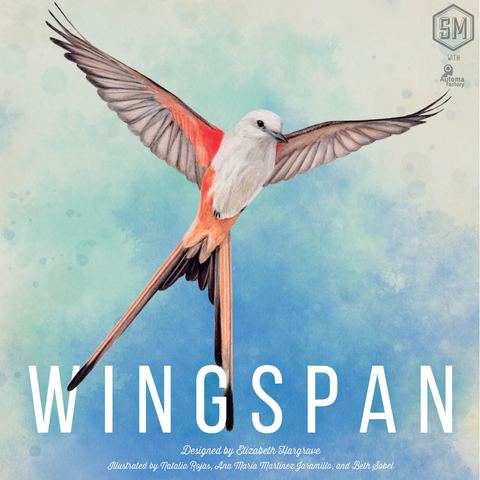
Wingspan
1–5 players. Around 70–120 minutes.
Wingspan centres on a shared bird tray from which players draw birds for their aviary. At one or two players, the tray refills quickly enough that the drafting is low-pressure. At three or four, the birds you were watching get taken, which forces useful decisions about whether to draft now or continue building an engine.
Five players extends the same competition but adds a noticeable amount of wait between turns. The 3–4 range sits between both extremes: enough competition for the shared tray to matter, enough pace that waiting does not become the main experience.
Flamecraft
1–5 players. Around 60–90 minutes.
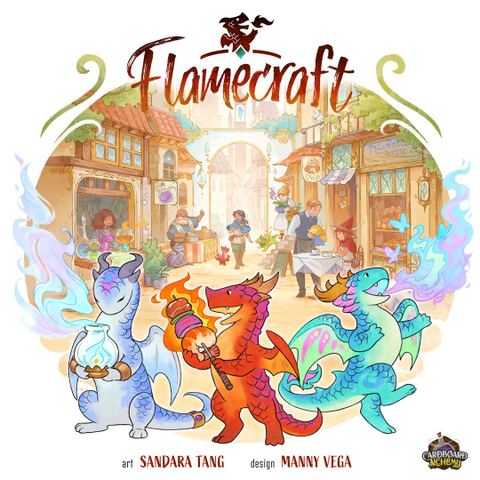
Flamecraft is built around a town of shops staffed by dragons. Players gather resources, enchant shops and recruit dragons. At one or two players, the town has more capacity than players can exhaust; choices about which shops to visit carry low stakes.
At three or four, shop competition becomes meaningful. The enchanting mechanic — placing an upgrade on a shop — creates immediate tension because the next player can also benefit from that enhanced shop. The game uses accessible mechanics that teach quickly at this count.
Sagrada
1–4 players. Around 30–45 minutes.
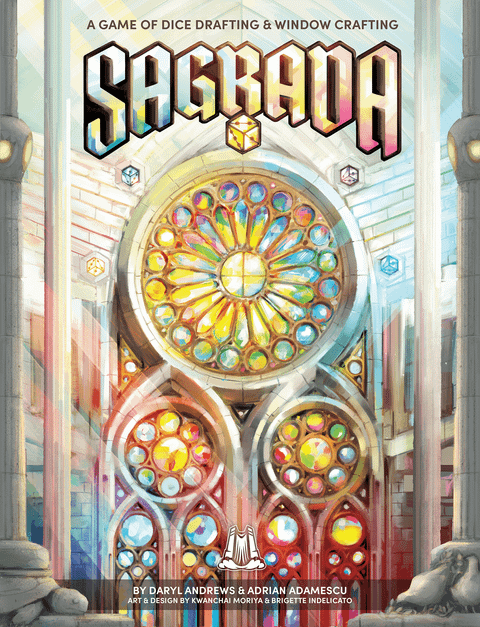
Sagrada is a dice-drafting game in which players build stained-glass windows. A pool of dice is rolled and passed around the table; each player takes one die per turn and places it subject to colour and value adjacency rules. The mechanism relies on competition for specific dice.
At one or two players, the pool contains more usable dice than either player can exhaust, which reduces the constraint the rules are built around. At three or four, the pool is sized correctly: you frequently cannot take the die you need, and the puzzle the game is asking you to solve tightens into something genuinely interesting.
Ark Nova
1–4 players. Around 90–150 minutes. Runs longer with more players.
Ark Nova is the heavy option on this list. Players build and manage a zoo, funding conservation projects while managing a hand of animal and action cards. The conservation project market — a shared pool that players compete to fund — creates real competition at three or four in a way that solo or two-player games do not fully express.
Expect a full evening rather than an hour. The publisher-stated time reflects experienced players; newer groups at three or four commonly run longer. This is a game for a gathering built around it, not a secondary activity.
Harmonies
1–5 players. Around 30–45 minutes.
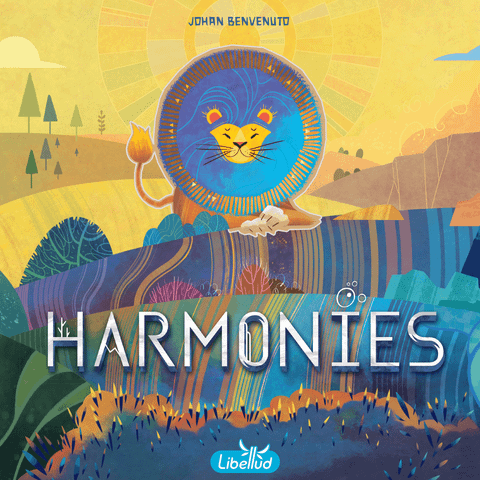
Harmonies is a lighter tile and token placement game. Players place animal tokens and terrain tiles to build a varied landscape scored across several categories. At one or two players, the animal token pool is generous enough that competition for a specific type rarely creates meaningful decisions.
At three or four, the available tokens thin out enough to matter. The game’s visual output is what it is at any count — finished tableaux look like completed landscapes — but the decisions that shape them have more weight at this count than at lower ones.
Player count in a collection
A collection can look balanced on a shelf and still support only one group size. Twelve games listed as 2–4 players alongside four listed as 4–8 players is a different collection from one that spreads across the full range — or from one that works specifically for two.
In the Board Game Almanac collection tracker, the owned list shows each game’s catalogue player range where it is recorded. The profile does not total games by player count, so check your owned titles one by one against the group you can actually assemble. The tracking guide explains what the shelf and profile do show.
For two-player titles specifically, Board games for two players covers games built or scaled for exactly that situation. For when the group runs larger, Board games for five or six players covers the top end of most catalogues.
The games
Every entry links to its full catalogue record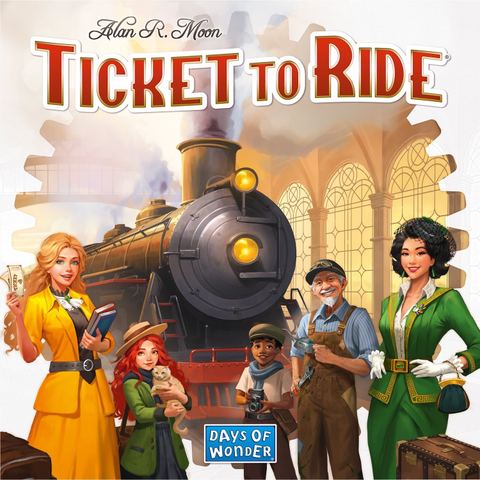

What are the best board games for 3 or 4 players?
Eight board games that work well with three or four players — publisher-stated counts, play times and what the mechanism does differently at this size.
Search the full catalogueMore guides
- Buying guideBoard games past the gateway stageSix board games for groups that have enjoyed Ticket to Ride or Catan and want more strategic depth. Player counts, teach times, and fit notes for each.
- ReviewsBlood Rage, according to the people who played itFive reviewers praise Blood Rage's miniatures and card-driven combat, but split on expansion pricing, a figurine design, and whether one card distorts the game.
- Table cultureThe rule you have been getting wrongHow common rule errors stay hidden in popular games, why they rarely surface until someone checks, and what to do when you find one mid-session.