
What your board game collection says about you
Your shelf reveals what you planned to play, whom you imagined inviting and how confidently you once estimated cupboard space. It does not reveal your personality, however persuasive the unopened campaign box looks.
Your board game collection says more about your intended calendar than your personality. It records the groups you expected to assemble, the rules you expected everyone to learn and the storage capacity you assessed during a brief period of unreasonable confidence.
That is the joke, but also the limit. Research on hobby boardgaming describes sociality, intellectual challenge, variety and materiality as important parts of its appeal. A wider systematic review of consumer collecting found several quite different motivations, including collecting goals, social membership, memories, legacy and financial value. The same full shelf could therefore belong to people with entirely different reasons for filling it.
So this is not personality science. It is a field guide to patterns a shelf can actually show. The four boxes pictured above demonstrate material variety, not four diagnoses waiting to happen.
The Ready Shelf
Visible evidence: a modest number of games, obvious wear, few unopened boxes and a high ratio of repeat plays to purchases.
You do not own a collection so much as operate a small repertory company. The cast knows its cues. Nobody begins game night by watching a 48-minute rules video while the host mutters that it will all make sense after the first round.
The likely practical truth is that this shelf was built around real opponents and real evenings. It may reflect the social side of the hobby, or merely a strict one-in-one-out policy enforced by the physical dimensions of the home. The shelf cannot tell us which.
The Beautiful Backlog
Visible evidence: sealed boxes, unpunched sheets, several campaigns at scenario one and release dates that now require scrolling.
You collect future Tuesdays. Each box is a complete evening in which everybody arrives on time, has eaten, understands deck-building and does not cancel because the child has developed a mysterious cough. Buying the game was the easy part of scheduling the game.
Players openly disagree about whether an unplayed game is shameful, normal or simply new. In one community discussion about unplayed collections, even the definition changes depending on whether solo play or a game played on someone else’s copy counts. “Unplayed” is measurable; guilt is optional.
The Expansion Optimist
Visible evidence: one game family occupies a geological layer, dividers have acquired dividers, and the expansion-to-base-game ratio needs its own spreadsheet.
You found a system you enjoy and responded with the calm moderation of a municipal annexation programme. Somewhere in the shelf is a module that fixes a problem your group has never noticed because that module has not been opened.
This pattern can mean loyalty, completion goals, a steady play group or a love of organised abundance. Collectors in a discussion about counting expansions described everything from hard shelf caps to expansion-heavy collections. The number is interesting, but it is not a moral score.
The Social Logistics Department
Visible evidence: player counts spread from two to many, short teaches, word or party games near the front, and at least one battered box that always leaves the house.
You know that “up to eight players” is not a demographic forecast. You own games for the people who actually appear, including the person who says they do not like board games and then becomes extremely invested in a team clue.
This shelf is less about difficulty than hospitality: matching the table’s energy, attention and time. It also tends to belong to the person who brings the game, teaches the game, finds the missing pencil and eventually packs the game while everybody else discusses where to go next.
The Systems Department
Visible evidence: long listed play times, repeated mechanisms, rulebooks with indexes and a suspicious number of storage trays.
Your preferred evening has a planning horizon. The phrase “one quick game” is used only to distinguish tonight’s four-hour game from the one that requires a weekend and a shared calendar.
The generous reading is intellectual challenge: learning a system, seeing how its parts interact and improving over repeated sessions. The less generous reading is that you have founded a small university whose only student intake is three friends who thought they were coming for dinner.
The Two-Person Foreign Office
Visible evidence: two-player-only boxes, compact games and titles that can be set up without extending the dining table.
You have solved the hardest problem in board gaming: identifying one other available person. Your collection is not waiting for an ideal group of five whose work, family and enthusiasm all align on the second Thursday of the month. It has a foreign policy, a standing bilateral partner and probably a well-developed view on whether takebacks are binding.
The Kallax Tetris Champion
Visible evidence: boxes arranged by dimensions, expansions consolidated into base boxes, no wasted vertical space and at least one title stored in an orientation its insert designer did not intend.
Here the collection becomes architecture. The appeal of physical pieces and objects—the materiality identified in boardgaming research—is no longer an abstract concept. It is the reason a millimetre matters.
This owner may love games, orderly storage or the moment a 31-centimetre box fits into a 33-centimetre cube with the precision of a lunar docking. The shelf supports all three interpretations.
What the shelf cannot say
In a community thread asking this exact question, people used their collections to talk about hoped-for groups, campaign ambitions, dust, favourite formats and lack of time. Those accounts are useful because they show the range of stories owners tell about their own shelves. They do not authorise us to tell a stranger’s story for them.
A collection can show counts, mechanisms, player ranges, listed duration, box volume, expansions and—if the owner records it—the gap between owning and playing. It cannot establish generosity, intelligence, competitiveness, friendship quality or whether the owner is “a real gamer”.
The safest conclusion is also the most accurate: your shelf says what you made room for. What actually reaches the table says what your life currently has room to do.
If you want to record what your collection actually contains, the Board Game Almanac collection tracker arranges owned, played and wanted games into a visual Kallax shelf. How it works is a shorter read if you want the specifics before signing in.
The games
Every entry links to its full catalogue record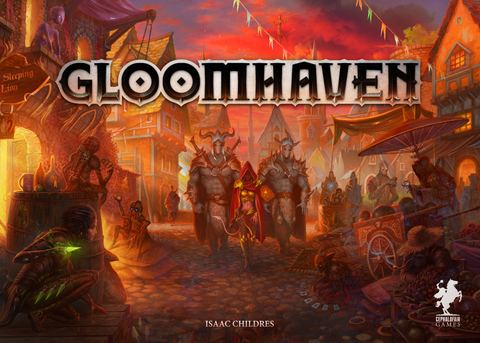
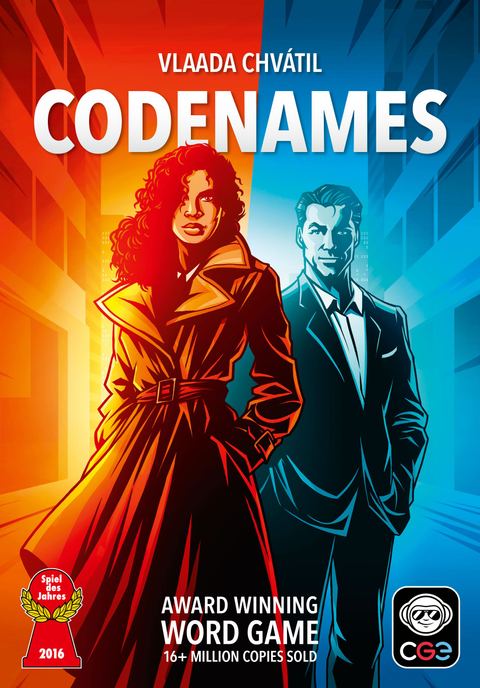

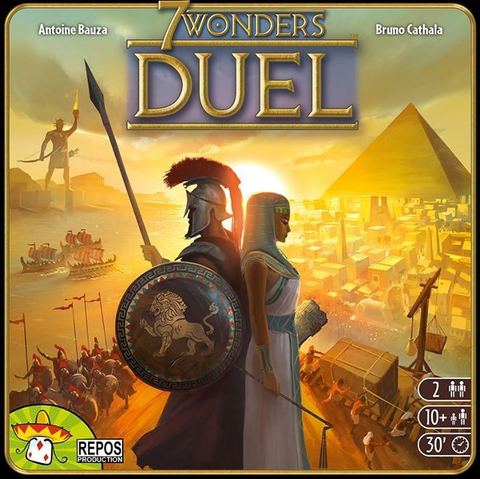
What does your board game collection say about you?
A researched and mildly incriminating guide to shelf habits, unplayed games, expansion optimism and what a collection cannot reveal.
Open your collectionResearch sources
Accessed and checked individuallyAccessed 23 August 2026
Research on hobby boardgaming identifies sociality, intellectual challenge, variety and materiality as important dimensions of the hobby.
Accessed 23 August 2026
The review consolidates 51 studies and finds several distinct collecting motivations; a shelf alone cannot identify which one applies.
- Community discussionr/boardgames: What does your collection say about you?
Accessed 23 August 2026
Individual participants describe campaign ambitions, dust, favourite formats and the people they hope will ask to play. These are reports, not a representative survey.
- Community discussionr/boardgames: How is your shelf of shame doing?
Accessed 23 August 2026
Participants discuss how they define and count owned but unplayed games; terminology and attitudes vary by person.
- Community discussionr/boardgames: How big is your collection with or without expansions?
Accessed 23 August 2026
Participants describe expansion counts, shelf limits and deliberate collection caps. It illustrates recurring experiences rather than a universal norm.
More guides
- Buying guideBoard games past the gateway stageSix board games for groups that have enjoyed Ticket to Ride or Catan and want more strategic depth. Player counts, teach times, and fit notes for each.
- ReviewsBlood Rage, according to the people who played itFive reviewers praise Blood Rage's miniatures and card-driven combat, but split on expansion pricing, a figurine design, and whether one card distorts the game.
- Table cultureThe rule you have been getting wrongHow common rule errors stay hidden in popular games, why they rarely surface until someone checks, and what to do when you find one mid-session.