
Pandemic, according to the people who played it
Pandemic earns consistent praise as the cooperative game that introduced a generation of groups to board gaming. The disagreement is specific — five reviewers split on whether quarterbacking is a serious problem, how many plays it takes to feel solved, and whether two or four players is the better count.
Five independent hands-on reviewers found Pandemic to be the clearest entry point into cooperative board gaming available. The disagreement concerns three specific issues: whether the alpha player problem is a serious obstacle, how deep the replayability runs for experienced groups, and what player count produces the better experience.
This synthesis draws on five hands-on written reviews and one official publisher source. It does not represent Almanac play-testing.
What reviewers agree on
Quinns at Shut Up & Sit Down described Pandemic as “captivating, pacey and dramatic” and “the perfect game to start your board game collection.” Ashley Gariepy at Meeple Mountain called it “a phenomenal game” whose mechanisms “still hold up” more than a decade after release — “a necessary rite of passage for hobby board gamers.” Kaitlyn at Hexagamers described it as “one of the best cooperative games ever made — it belongs in every collection.”
The convergence is on structure. Pandemic is a cooperative game with a clear theme, accessible rules, and a loss condition that arrives from multiple directions simultaneously. Players share one win condition — curing all four diseases — while managing outbreaks that compound if neglected. Tyler Nichols at Board Game Quest reviewed the first edition over 25+ sessions and recorded a 15% win rate, noting that “the 4 action allotment never seems to be enough”: the board deteriorates faster than any optimal path can fully address.
The Epidemic card mechanism earns particular attention from Kaitlyn’s Hexagamers review, which describes how epidemic cards — shuffled evenly across the player deck — produce “predictable tension curve, unpredictable disaster timing.” The group knows roughly when escalation will arrive but not which city will catch fire. This structure rewards planning while maintaining genuine surprise.
Role specialisation (each player takes a distinct CDC character with a different ability) creates real interdependence. All five reviewers describe this as functional cooperation rather than parallel solitaire, which is the primary praise Pandemic receives as a gateway to the cooperative genre.
Where they disagree
Alpha player problem. The most specific disagreement concerns quarterbacking — one experienced player directing the optimal moves of others.
The Elusive Meeple reviewer identifies it as “the biggest drawback,” writing that when one player begins directing optimal moves for others it “can descend into a solo player game with little to enjoy on your own turn.” Kaitlyn at Hexagamers acknowledges a “dominant player problem in groups with mixed confidence levels” but frames it as manageable through a table norm: “the player whose turn it is has final say.” Tyler Nichols at Board Game Quest notes the risk but reports positive experiences. Quinns at Shut Up & Sit Down does not raise the issue.
The divergence likely reflects group composition. Pandemic’s optimal moves are often visible to someone who has played before; when that person is at the table and confident, the quarterbacking dynamic is real. Groups of similar experience — or groups that explicitly agree to let each player own their turn — are much less affected.
Replayability depth. The Elusive Meeple reviewer writes that “once the puzzle is solved it is still fun, but it won’t give you as much of a challenge,” framing decreased challenge as a natural ceiling. Tyler Nichols at Board Game Quest finds replayability “endless” through variable roles, epidemic card placement, and adjustable difficulty. Ashley Gariepy at Meeple Mountain cites the difficulty scaling — adding more Epidemic cards to the deck increases challenge — and the wide expansion library as replay extenders.
This disagreement most likely reflects how groups engage with the difficulty system. The standard configuration (four Epidemic cards) is designed for new players; experienced groups that remain at that level may find the strategic space familiar. Those who advance through harder configurations or add expansions report a meaningfully different experience.
Player count. The Elusive Meeple reviewer names four players as the best count. Kaitlyn at Hexagamers states the game “plays just as well with 2 as with 4.” Ashley Gariepy at Meeple Mountain mentions solo play (controlling multiple roles) as viable.
The two-player and four-player experiences are structurally different. At four players, coordination becomes more complex and communication more important; the alpha player dynamic is more likely to emerge. At two, each player controls more of the board, reducing coordination overhead but potentially concentrating decision-making. Both configurations have genuine advocates; the right count depends more on the group than the game.
Who it suits, and who should skip it
Suits: Groups new to cooperative board gaming — particularly those coming from competitive games who want to try working together, or those introducing family members and new players to the hobby. The rules explain within one setup, the theme is accessible, and losing by a narrow margin still produces a tense, memorable session. Pandemic also works reliably as a two-player option for households that need a cooperation game without a full group.
For groups ready to learn their next game, the guide to teaching board games covers how to run a first explain for Pandemic-style games with a clear win condition.
Consider before buying: Groups with one experienced gamer and several new players benefit from agreeing upfront on how to handle the alpha player dynamic — before the first close game produces a contested decision. The reviewer who calls quarterbacking “the biggest drawback” is describing a specific group composition problem, not a universal experience.
Skip or upgrade: Groups who have played Pandemic many times at standard difficulty and found the strategic ceiling should consider Pandemic Legacy: Season 1 (a campaign version that evolves the game permanently across sessions, widely considered the deeper version) or Spirit Island (a heavily asymmetric cooperative with significantly more strategic complexity). Groups wanting a lighter cooperative — shorter, simpler, lower stakes — may find Forbidden Island, also designed by Matt Leacock, closer to the table weight they need.
What to compare next
Pandemic Legacy: Season 1 is the most common upgrade path in the reviewer community. It uses the same base mechanics but adds permanent changes to the board, roles, and rules across a 12–24 session campaign. The depth is considerably greater; the commitment is also greater. It is a different product from the base game and should be considered separately rather than as a reason to skip the base.
Spirit Island is a heavier asymmetric cooperative. Reviewers who find Pandemic solved at standard difficulty frequently name it as the step up for groups that want a cooperative experience that resists the same ceiling. The rules complexity and setup time are substantially higher.
Forbidden Island (also designed by Matt Leacock) is a lighter, shorter cooperative with similar structural DNA. It is a lower-stakes introduction to Pandemic-style cooperation for groups not yet ready for Pandemic’s full complexity or for groups who need a game that finishes in thirty minutes.
If you add Pandemic to your shelf, the Board Game Almanac collection tracker records which games in your collection you have actually played — useful for identifying whether short cooperative games like Pandemic are reaching the table as often as you expected when you bought them.
The games
Every entry links to its full catalogue record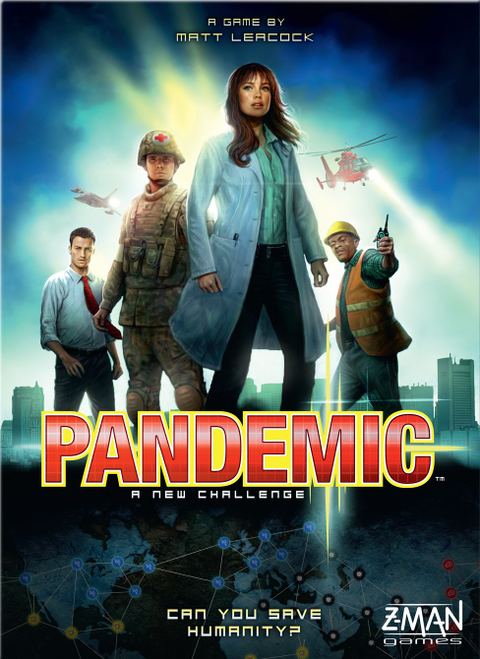
Is Pandemic worth buying?
Five hands-on reviewers converge on Pandemic as the cooperative gateway, but split on the alpha player problem, replayability depth, and best player count.
Search the full catalogueReview evidence
Accessed and checked individually- Official sourceZ-Man Games / Asmodee: Pandemic — Official Product Page
Accessed 20 September 2026
Matt Leacock, designer. Z-Man Games (original 2008, second edition 2013). 2–4 players, 45–60 minutes. Second edition added Contingency Planner and Quarantine Specialist roles. Does not count toward the five independent reviewer sources.
- Written reviewShut Up & Sit Down: Review — Pandemic
Accessed 20 September 2026 · Independent group: Shut Up & Sit Down · Product access: not stated · disclosure not found
Quinns reviewed Pandemic for Shut Up & Sit Down (originally via Eurogamer partnership). Described as 'captivating, pacey and dramatic' and 'the perfect game to start your board game collection.' No product-access or paid-promotion disclosure found.
- Written reviewBoard Game Quest: Pandemic Board Game Review
Accessed 20 September 2026 · Independent group: Board Game Quest · Product access: not stated · disclosure not found
Tyler Nichols reviewed the first edition after 25+ plays, reporting a 15% win rate. 5-star rating. Notes alpha player risk but finds replayability strong through role variety and difficulty settings. Amazon affiliate disclosure; no review copy disclosure.
- Written reviewMeeple Mountain: Games We Love: Pandemic
Accessed 20 September 2026 · Independent group: Meeple Mountain · Product access: not stated · disclosure not found
Ashley Gariepy, August 2020. Describes it as 'a necessary rite of passage for hobby board gamers.' Mechanisms praised as still holding up after a decade. Owns a personal copy. Amazon affiliate links; no review copy disclosure.
- Written reviewElusive Meeple: Pandemic Review
Accessed 20 September 2026 · Independent group: Elusive Meeple · Product access: not stated · disclosure not found
Elusivemeeple, August 2017. Identifies quarterbacking as 'the biggest drawback' and warns that once the puzzle is solved the challenge diminishes. Recommends 4 players as the best count. No commercial disclosures found.
- Written reviewHexagamers: Pandemic: Review
Accessed 20 September 2026 · Independent group: Hexagamers · Product access: not stated · disclosure not found
Kaitlyn, March 2017 (updated January 2025). Notes dominant player problem in mixed groups but manageable through table agreement. States it 'plays just as well with 2 as with 4.' Amazon affiliate links; no review copy disclosure.
More guides
- Buying guideBoard games past the gateway stageSix board games for groups that have enjoyed Ticket to Ride or Catan and want more strategic depth. Player counts, teach times, and fit notes for each.
- ReviewsBlood Rage, according to the people who played itFive reviewers praise Blood Rage's miniatures and card-driven combat, but split on expansion pricing, a figurine design, and whether one card distorts the game.
- Table cultureThe rule you have been getting wrongHow common rule errors stay hidden in popular games, why they rarely surface until someone checks, and what to do when you find one mid-session.