
Cooperative board games, by group type
All cooperative games share one rule — the group wins together or loses together — but the category spans twenty-minute party games and hundred-hour dungeon campaigns. The right pick depends on evening length, complexity appetite and whether you want everyone to have an equal voice.
All cooperative games share one rule: the group wins together or loses together. But that shared premise covers everything from a twenty-minute guessing game to a hundred-hour dungeon campaign, and those are not the same purchase. The type that fits your group depends on how long your evenings run, how much the table is willing to read, and whether everyone’s contribution matters or just the loudest voice.
Light cooperative games
Light cooperative games work when the group includes people who do not play board games regularly, when the session is short, or when you want something that generates moments rather than a managed game state.
Just One won the 2019 Spiel des Jahres. Three to seven players each write a single-word clue on a small board, duplicate clues are eliminated before the active player sees them, and the active player then guesses from whatever survived. The mechanism is extremely simple; the fun comes from the gap between what you thought was an obvious clue and what six other people also thought was obvious. The jury specifically cited how it draws spectators who want to join immediately, which is a genuine design achievement. Add a player at any point.
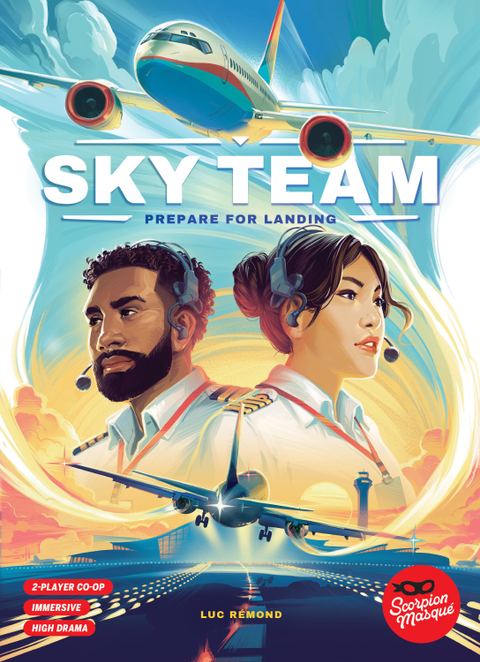
Sky Team won the 2024 Spiel des Jahres and is strictly for two. You and your copilot roll dice in secret and place them on aircraft cockpit controls without speaking, trying to land a plane. The rules fit on a single page; the near-misses are what most sessions remember. It works for couples or for two people who want a cooperative game that scales exactly to two without feeling like a compromise.
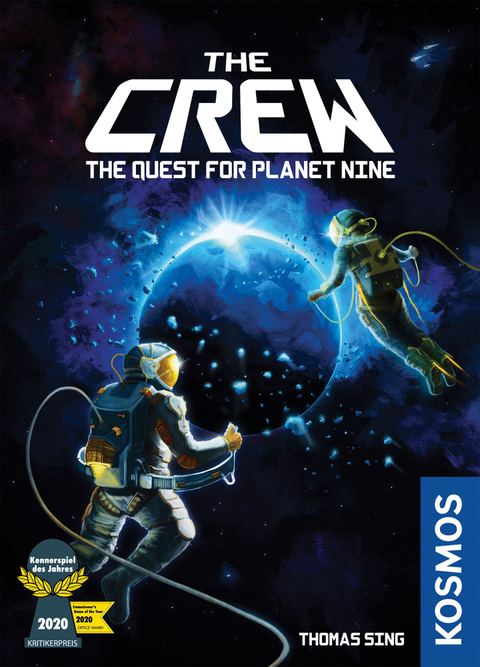
The Crew: The Quest for Planet Nine won the 2020 Kennerspiel des Jahres. It is a cooperative trick-taking card game for two to five where players complete missions by distributing specific cards to specific players — using only the ordinary mechanics of tricks and a limited set of communication tokens. People who already play trick-taking games learn it in five minutes. People who do not will learn it in twenty, and the missions get significantly harder as the campaign progresses.
Medium-weight cooperative games
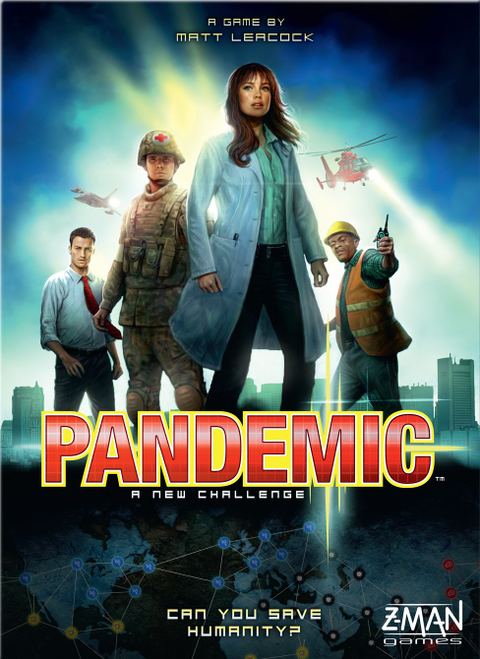
Pandemic is the canonical medium-weight cooperative recommendation for groups ready to manage an actual game state. Two to four players specialise in different roles and race against an epidemic deck to control disease outbreaks across a world map. It teaches efficiently because each role is visually distinct and your priorities are clear from the first turn. It runs around 45 minutes.
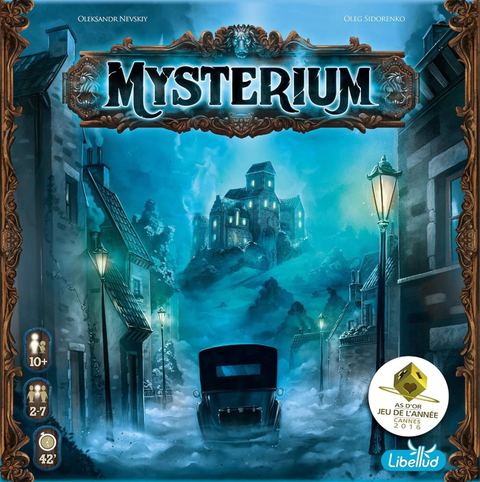
Mysterium is asymmetric: one player is a ghost who can communicate only through illustrated dream cards; the remaining players are investigators who interpret those images as clues toward a murder verdict. It plays two to seven people and runs sixty to seventy-five minutes. The asymmetric design is relevant because it makes the group’s dominant problem harder to sustain — see below.
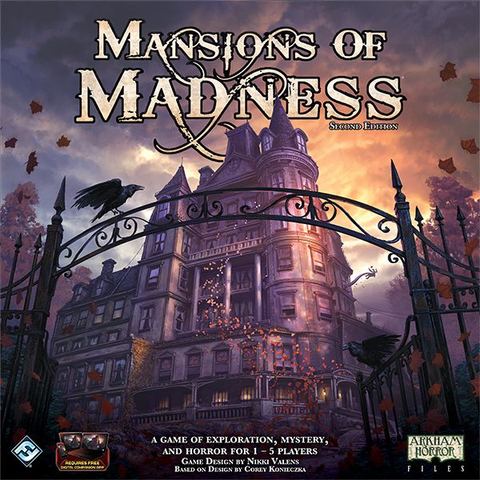
Mansions of Madness Second Edition uses a companion app to drive its scenarios. One to five players move through a physical board while the app tracks rooms, monster behaviour and story events. The teach is compact because the app handles the rules state; sessions run 90 to 120 minutes and carry a horror investigation atmosphere that the lighter types do not.
Campaign and committed-group games
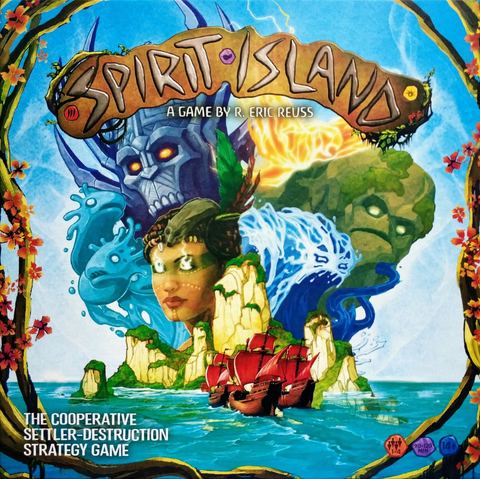
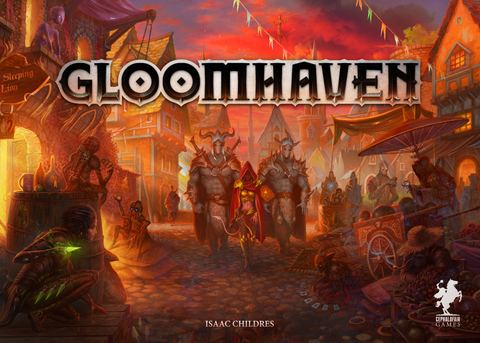
Spirit Island and Gloomhaven are the two reference points for heavy cooperative play.
Spirit Island has one to four players defending an island from colonisers by combining powers from a hand of cards. Complexity is high from the first session and scales with the number of spirits in play. It does not have a linked narrative campaign, but the upgrade structure and difficulty settings mean there is significant depth to work through. A two-player session at standard difficulty typically runs 90 minutes; four players take longer.
Gloomhaven runs a persistent physical campaign. Characters level up and eventually retire, new options unlock, and the map changes across many sessions of 90 to 150 minutes each. The commitment matches that scope: this is not a game you finish in a month with an irregular group, and the unlock structure depends on consistent attendance.
The problem all cooperative games share
Cooperative games have a documented structural tension. In a group of mixed experience, the player with the most knowledge can see the optimal play for each turn and direct the others. BoardGameGeek’s cooperative game community calls this the alpha-player problem: one person effectively plays the game solo while others execute instructions.
Different designs address it differently. Just One and Sky Team make it structurally impossible because hidden information means no one can direct another’s play. The Crew restricts communication during missions. Mysterium limits what any one player can see. Pandemic and Gloomhaven have the problem to varying degrees; groups that encounter it usually resolve it through a direct conversation, which is a resolution the game does not prevent.
A second version of the problem is the opposite: when everyone waits for someone to have the answer, and no one does. Complex cooperative games generate a specific type of rules question — a power combination in Spirit Island, a card effect in Gloomhaven, a timing conflict in Mansions of Madness — where the whole table stops because no one is certain. If the game is supported, Rodney at /rules can answer from its selected reviewed rulebook without sending one player through the booklet from page one.
If you are adding cooperative games to your collection, the owned list keeps them beside your other titles and shows each recorded player range. The collection profile can surface frequently recorded mechanisms, but it does not show a player-count distribution; compare individual game records with the group you can actually assemble.
The games
Every entry links to its full catalogue record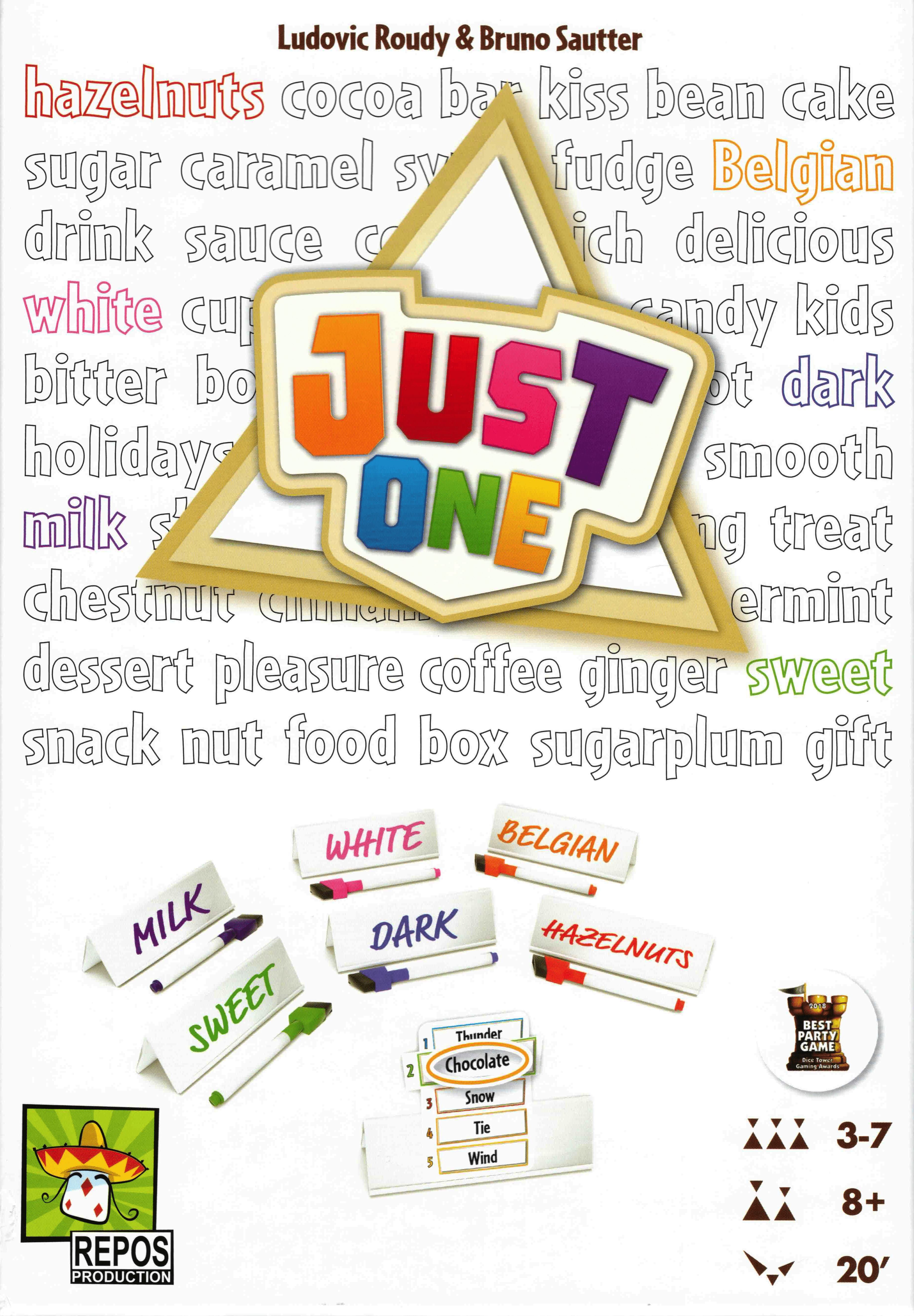
What are the best cooperative board games for groups?
Cooperative board games range from 20-minute party games to 100-hour campaigns. The type that fits your group matters more than any rating.
Search the full catalogueResearch sources
Accessed and checked individually- Official sourceSpiel des Jahres: Spiel des Jahres 2024: Sky Team
Accessed 26 September 2026
Official announcement that Sky Team won the 2024 Spiel des Jahres. Confirms it is a 2-player cooperative game.
- Official sourceSpiel des Jahres: Award winners 2019
Accessed 26 September 2026
Official record that Just One (Repos Production) won the 2019 Spiel des Jahres. Jury cited its accessibility and instant attraction to spectators who joined without needing a teach.
- Official sourceSpiel des Jahres: The winners 2020
Accessed 26 September 2026
Official record that The Crew — The Quest for Planet Nine won the 2020 Kennerspiel des Jahres.
- Community discussionBoardGameGeek: 100% Co-op Board Games that avoid the Alpha Player problem
Accessed 26 September 2026
Community-curated BGG list identifying cooperative games whose design prevents one player from dictating other players' moves. Documents the alpha-player problem and the design responses to it as experienced phenomena reported across hundreds of community contributors.
More guides
- Buying guideBoard games past the gateway stageSix board games for groups that have enjoyed Ticket to Ride or Catan and want more strategic depth. Player counts, teach times, and fit notes for each.
- ReviewsBlood Rage, according to the people who played itFive reviewers praise Blood Rage's miniatures and card-driven combat, but split on expansion pricing, a figurine design, and whether one card distorts the game.
- Table cultureThe rule you have been getting wrongHow common rule errors stay hidden in popular games, why they rarely surface until someone checks, and what to do when you find one mid-session.